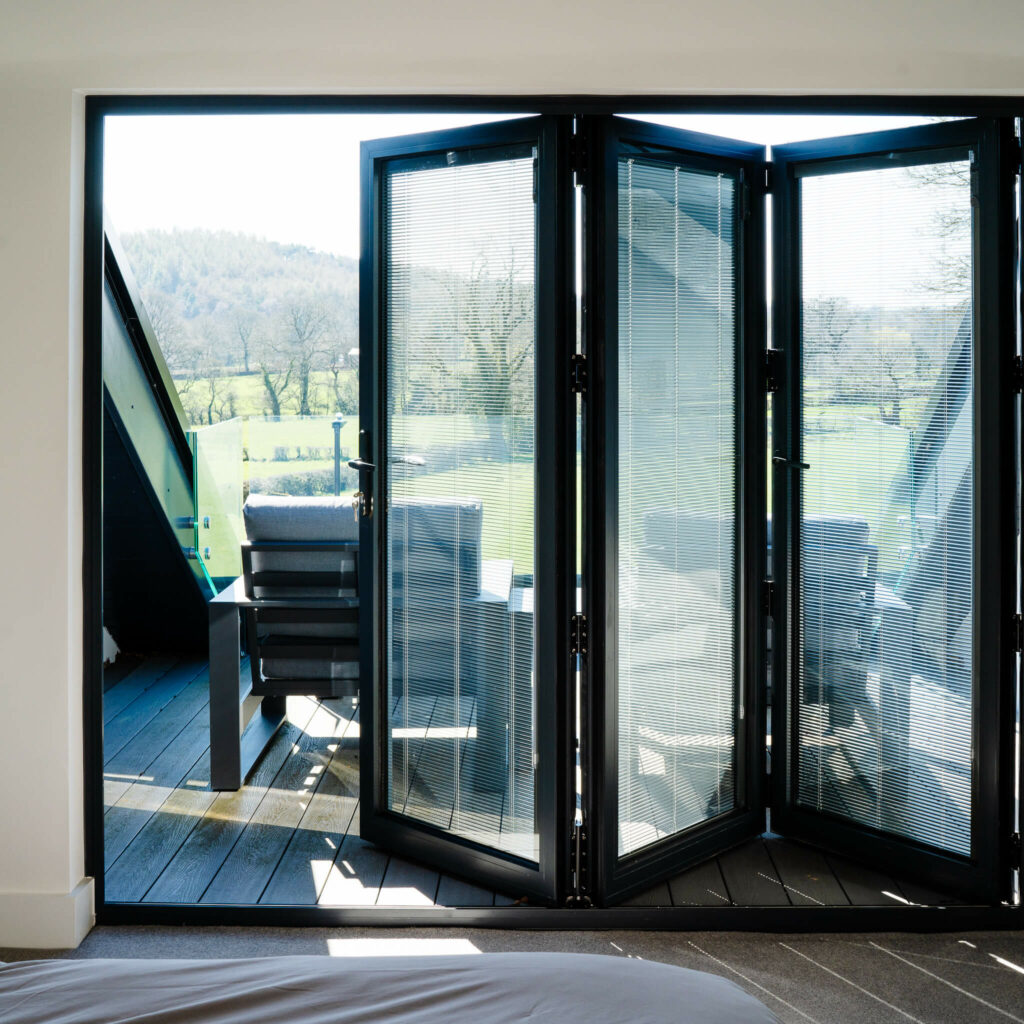


Aluminium bifold doors can stick or go out of alignment over time. This guide helps North East homeowners and self-builders diagnose and fix common issues with external aluminium bifolds (like Smart’s popular Visofold 1000 Slim). We’ll explain tools needed, step-by-step adjustments (top/bottom pivots, rollers, traffic door, locks), real-world symptoms, and when to call in professionals. BM Bifolding Doors in Middlesbrough are local experts (manufactured in UK, fitted across the North East with a 10-year guarantee) and can help with any difficult servicing.
The Visofold 1000 Slim is a thermally broken aluminium system with slim frames and robust hardware. Recent upgrades include PAS 24–approved rollers, heavy-duty shootbolt handles, and magnetic latches to keep panels tight in winds. Panels can be large (up to about 1200×2500 mm), so always work carefully. The instructions below apply to these heavy-duty external bifolds (not light indoor closet doors).
Tools, Preparation and Safety
- Tools: Prepare Allen keys (often 4 mm for cams, 5 mm for hinge screws), PZ2/Philips and flat screwdrivers, a small adjustable spanner or 7 mm wrench, a spirit level or square, and a tape measure. Have packing shims (2–5 mm), a flashlight, and a silicone spray lubricant. A rubber mallet can help tap anchors.
- Prep: Clear debris from tracks and wipe hardware clean. Lubricate moving parts lightly (rollers, hinges, pivots) with silicone spray before adjusting. This initial clean-up often eases movement.
- Safety: Bifold panels (especially glass) are heavy. Work with someone else or use supports when loosening hinges or pivots to prevent the door from dropping. Never loosen more than two hinges/pivots at once or the panel may fall. Wear gloves and eye protection. If any hinge is badly worn or the glass seems loose, stop and call a professional for that repair.
Diagnosing Door Problems
First, identify symptoms. Slide the doors fully open and closed and watch/listen for issues. Common signs include:
- Dragging or sticking: A panel scrapes the frame or floor when moving.
- Uneven gaps: One side of a door sticks out or gaps vary between panels.
- Locking problems: The handle feels tight, key won’t turn, or shootbolts won’t engage.
- Drooping or leaning: A panel tilts or sags, often visible at the head or jamb.
- Strange noises: Rattling or squeaking in hinges or carriers.
“Whenever you identify any problem, your initial objective should be to zone in on where the pain originates”. For example, if the lead (traffic) door – the panel with the handle – doesn’t seat properly, the other panels will bind. Check that the door sits correctly against the jamb and seals evenly all around. If one panel appears higher or lower than others, note which one. Testing with a spirit level or ruler can show which way the door leans.
Common causes of misalignment include wear and tear, temperature changes, and settlement. Hinges, pivot pins, and track brackets can loosen with use. In summer heat the metal frame may expand slightly, and in winter contract, causing jams. Even a slight shift in the house foundation or frame out-of-square can unbalance the doors. Dust in the track or a dropped frame sill can also cause binding. Identifying the exact symptom (dragging, loose latch, etc.) will guide which adjustment to make.
Adjusting the Top Pivot Bracket
Fig: Loosen the top pivot bracket screw and slide it to lift a sagging panel.
The top pivot (in the head of the frame) controls vertical alignment and tilt of the panel. If a panel tilts or the top corner catches, adjust this first.
- Open the door fully so you can reach the top pivot bracket inside the frame.
- Loosen the pivot bracket screw (usually a small Phillips screw or Allen bolt) just enough to move the bracket.
- Slide the bracket: If the panel is sagging, slide the bracket along the track upward (toward the frame head) to lift the panel. If the panel leans away from the frame on one side, slide the pivot bracket sideways toward the high side. Make very small moves (a few millimetres) and re-tighten to test.
- Retighten and test: Once the door hangs plumb, tighten the screw fully. Open and close the panel to check for improvement. A correct adjustment will make the door hang straight in the head and clear the frame evenly.
Repeat as needed in tiny increments until the panel is level. This “toe-and-heel” style adjustment of the pivot often fixes a crooking door. If the top corner of the door rubs the frame, raising the pivot slightly will drop the edge a little, and vice versa.
Adjusting the Bottom Pivot Bracket
Fig: Raise or lower the bottom pivot by turning its adjustment screw.
The bottom pivot (often a screw or pin at the sill) sets the door height and stability. If the door drags on the sill or has a large gap underneath, adjust the bottom pivot:
- Locate the bottom pivot on the traffic door. You’ll often see a screw head or nut on the pivot plate. Use the correct tool (often a 5 mm Allen key or spanner) to turn the pivot.
- Raising the door: Turn the adjustment screw clockwise a little – this raises the door’s body off the pivot pin. Do this if the door is scraping the sill.
- Lowering the door: Turn the screw anticlockwise to lower it if there is a big gap at the bottom.
- Make small turns and check the gap. You want the panel to move freely without dragging, with a few millimetres clearance. After each tweak, open/close to test.
- Next, fine–tune side-to-side: Loosen the bottom pivot bracket’s retaining screw and slide it so the door panel is parallel to the frame. Once the door is straight and tight against the frame, tighten the screw.
Real-world tip: A homeowner might notice the door scrapes the threshold in winter – simply rotating the bottom pivot screw up a turn or two usually lifts the door enough to clear. Conversely, if a panel drops and rattles below the seal, lowering the pivot a bit tightens it up. Always test fully closed and fully open after each move.
Adjusting Rollers and Intermediate Carriers
Some bifolds use bottom rollers or top carriers for intermediate panels. For top-hung systems like Visofold, check the intermediate top carriers in the head track:
- Slide the door panels to see each carrier. Clean the track and rollers so they run freely.
- If a panel drags when opening or closing, it may be too low. Use the Allen key on the carrier or pivot set-screw (usually inside the track).
- Turn clockwise to raise that panel; anticlockwise to lower it. Adjust in small steps. This lets each intermediate panel bear more or less weight on the pivot.
- After adjusting, lift or lower until panels glide without binding. Lubricate the rollers lightly so they roll smoothly.
If your bifold has bottom track rollers (less common on Visofold), use a screwdriver in the roller slot to set the wheel height similarly: turning one way raises the wheel, the other lowers it. The goal is minimal clearance without drag.
Aligning the Traffic Door and Cams
The traffic (master) door is the one with the handle that closes into the frame. It often needs the most precise alignment:
- With the door open, check side-to-side: If it’s hitting the frame unevenly, use the top/bottom pivot slides above to shift the door until it sits flush. A 4–6 mm gap all around is ideal.
- Toe-and-heel: If the door’s bottom corner drags, adjust the bottom pivot as above. If the top corner binds, tweak the top pivot. Sometimes you may need a thin packer (shim) under one corner of the door (the “toe”) to relieve pressure – this is the classic toe-and-heel shim adjustment used by installers.
- Cams at the handle: Bifolds often have two or more cam devices around the handle that pull the door tight to the frame. If the handle feels very stiff or won’t lock, the cams might be mis-set. Insert a 4 mm Allen key into each cam (in the frame around the handle) and turn: 90° clockwise will loosen (reduce pressure), 90° anticlockwise will tighten the seal. Adjust until the door closes easily but seals well. Seasonal tip: you may loosen cams in summer (when everything expands) and tighten in winter.
- Check locking alignment: Finally, latch the door in the closed position. If the key still won’t turn or the handle won’t engage, tweak the door’s position slightly (via pivots) to achieve that ~5 mm jamb gap. The shootbolt should smoothly slide into its keeps.
For example, if after adjusting pivots the door still locks unevenly, adjust the cams or pivots so that the handle is straight when closed. [33] notes that loosened cams (one at top or bottom tightened or vice versa) can relieve binding on shootbolt rods.
Locking Mechanisms and Handles
Aluminium bifolds use multi-point locks and shootbolts. If the lock won’t turn or the handle sticks:
- First, test the lock with the door held open (so shootbolts are not engaged) to make sure the cylinder itself is free. If it turns freely then, the issue is alignment.
- Adjusting the pivots/cams as above usually resolves lock jams. You may also spray graphite or silicone lubricant into the lock and shootbolt barrel for smoothness.
- Tighten any loose screws on the handle or shootbolt mechanism. Over time screws can back out and cause slop.
- If a shootbolt refuses to engage even when aligned, the door frame keep may need adjusting (a rebated keep can be loosened and moved slightly). This is advanced – if it’s still hard, BM Bifolding Doors can realign frame keeps.
Remember, the lock components are security hardware. If you suspect damage or excessive wear (e.g. a worn shootbolt rod), contact a professional locksmith or BM Bifolding for service rather than forcing parts.
Final Checks and Maintenance
After any adjustment, re-test the door cycle several times. Open and close it through its full range, and lock/unlock it to ensure everything operates smoothly. All panels should fold and stack without catching.
Give everything a final wipe and lube: apply a small amount of silicone spray to all pivots, hinges, and rollers. Clean the threshold and top track so no dirt collects. Tighten any loose frame screws or fixings. Proper maintenance (cleaning and lubrication every 6–12 months) prevents most alignment problems later.
When to Call a Professional
Many minor adjustments you can handle, but certain situations need expert help:
- Falling or unstable panels: If a door droops badly even after pivot adjustments, or you must remove hinges, get professional help. Don’t remove more than two hinges at once.
- New cracks, warped frames or glass damage: These are structural issues beyond simple adjustment.
- Persistent gaps or binding: If small tweaks don’t fix uneven gaps, the entire frame might be out of square. This requires a fitter or engineer to pack or re-drill.
- Complex hardware issues: Extensive worn hardware (like broken shootbolt rods or snapped pivots) should be replaced by a specialist.
Our BM Bifolding Doors team in Middlesbrough are ready to advise or service your Visofold 1000 Slim system. They offer expert on-site adjustment and repairs across the North East, and can guarantee safe, accurate fixes.
By following these steps and taking care with your tools, you can often restore smooth operation to your aluminium bifold doors yourself. Always remember safety first: support heavy panels, work patiently, and if you’re ever unsure, call in the experts at BM Bifolding Doors. They supply and service Visofold systems daily and can ensure your doors work perfectly for years to come.
Sources: Authoritative guides on bifold adjustment and the Smart Visofold 1000 Slim system;
windowhardwaredirect.com
smartsystems.co.uk
bmbifoldingdoors.co.uk.